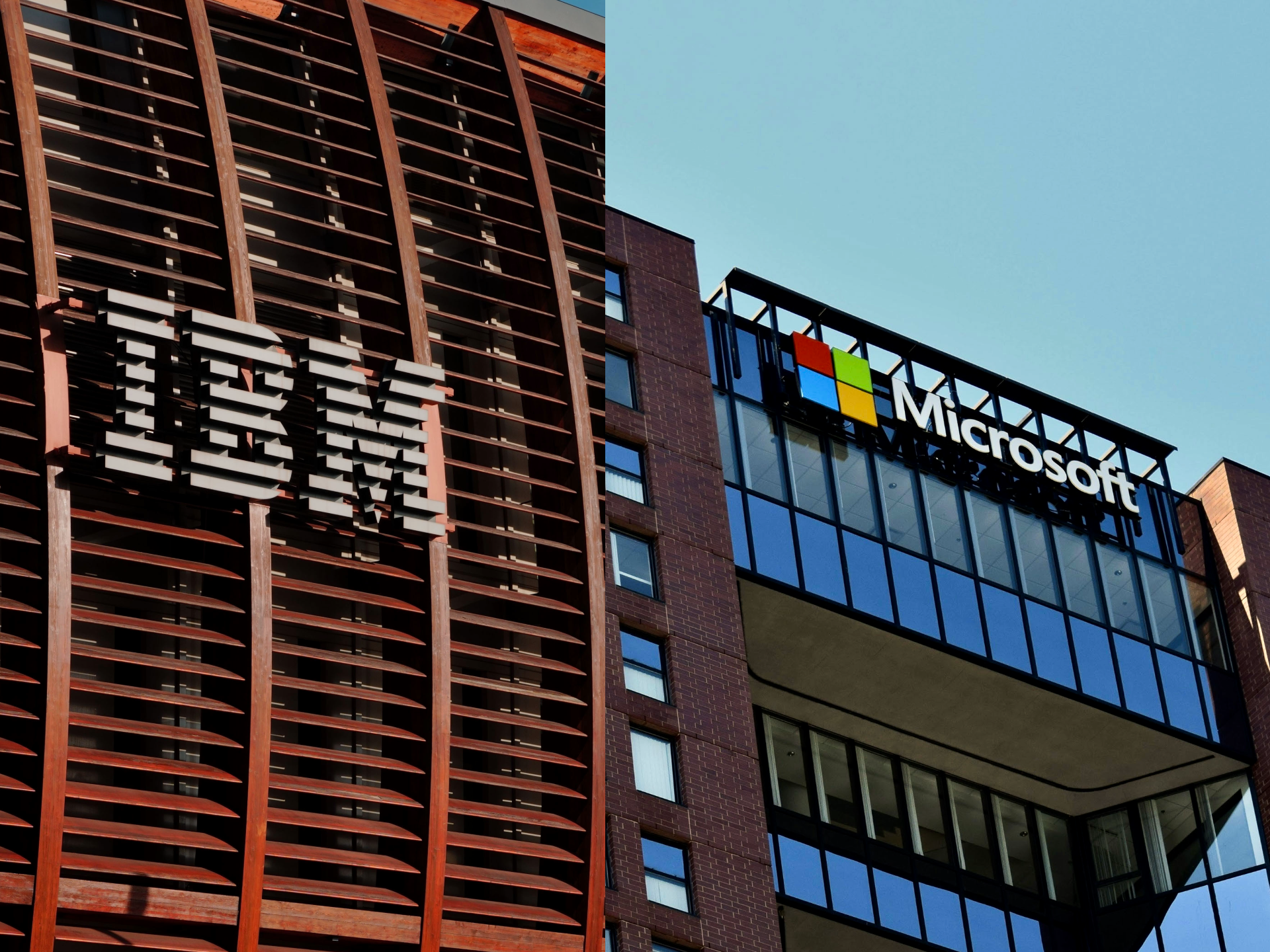
IBM and Microsoft have introduced Imagine Enterprise, a platform intended to help large organizations deploy AI agents across business processes rather than operate isolated chatbots. Announced on November 10, 2026, the collaboration combines IBM Consulting’s industry-specific assets and implementation services with Microsoft’s cloud, identity, security and AI products. The significant question is not how many agents are advertised, but what customers can verify before letting them act on business data.
The IBM Microsoft AI agent platform arrives as companies face a practical challenge: an agent that can retrieve information is different from one that can change a financial record, trigger a workflow or communicate with a customer. Imagine Enterprise is designed to address that transition through connected tools, enterprise context and governance. Its announcement, however, is not an independent demonstration of operational reliability.
What the IBM Microsoft AI agent platform actually includes
According to the joint announcement published by IBM, Imagine Enterprise brings together more than 6,000 prebuilt AI agents and assets associated with IBM Consulting Advantage, plus Microsoft technology for cloud services, data, identity, security and agent development. The figure describes a combined library of agents and assets; it is not a count of independently deployed agents, verified customers or completed projects.
The companies say their engineers can work directly with clients on implementation. Initial industry frameworks cover financial services, insurance and retail. Manufacturing, energy, the public sector and mobility are described as potential future extensions, not confirmed launches.
The Microsoft version of the announcement identifies Microsoft Foundry, Copilot Studio and GitHub Copilot among the tools supporting agent coordination, alongside Microsoft Fabric, Entra, Purview, Defender and Azure for enterprise data and controls. IBM identifies its Process Studio, Context Studio and Advantage Core as elements of the delivery approach.
Why the 6,000 figure needs context
Prebuilt assets can reduce the work required to assemble a system, but the number alone cannot tell a buyer whether the software suits a particular process. An asset might be a reusable component, an agent or another implementation resource. The announcement does not provide a public breakdown showing how many are production-ready for each industry, how many require extensive customization or what proportion have been independently evaluated.
That matters because regulated businesses cannot treat a demonstration as proof that an automated workflow complies with their own policies. A bank's account-maintenance process, for example, depends on its specific approvals, recordkeeping rules and customer permissions. An insurance workflow faces different obligations. The value of a prebuilt component depends on what remains to be configured, tested and monitored.
Unhyd previously examined the shift toward persistent workplace AI agents. IBM and Microsoft's new proposition is narrower in one respect and more service-intensive in another: it pairs technology with consultants tasked with adapting it to existing industry operations. Whether that combination lowers deployment costs or improves results will require customer evidence.
Governance is a product claim until it is tested
IBM and Microsoft emphasize controls, observability and compliance support. Those capabilities are relevant because agents may use multiple tools, retrieve sensitive information and perform actions across systems. But saying a platform includes governance does not establish how it behaves when permissions conflict, an instruction is malicious or an agent produces an incorrect recommendation.
Buyers should request demonstrations of specific failure cases: whether a tool call is blocked when a user lacks permission; whether sensitive information is excluded from the agent's accessible context; whether administrators can reconstruct an action; and whether a human can interrupt or reverse a consequential workflow. The answers should be documented against the actual configuration a customer plans to use.
The National Institute of Standards and Technology’s voluntary AI Risk Management Framework offers independent context for documenting and evaluating the risks of AI systems; it is not a certification of Imagine Enterprise. The issue is also familiar from Unhyd's coverage of Microsoft's workplace-agent safeguards. Additional controls are meaningful only when their scope, availability and effectiveness can be examined. A list of security products is not equivalent to a tested security outcome.
What the named customer example does—and does not—show
The companies cite financial technology and investment-services provider SEI as an example of enterprise transformation work. The announcement says SEI is exploring emerging and agentic technologies with IBM Consulting and Microsoft's support. It does not report a quantified productivity gain, audited cost reduction, independently measured error rate or completed enterprise-wide rollout attributable to Imagine Enterprise.
SEI's involvement offers a real business context, but the distinction between exploration and demonstrated impact should remain visible. Before treating the example as proof of performance, readers would need to know the processes involved, their baseline results, the evaluation period and how human intervention was counted.
How customers can access Imagine Enterprise
IBM and Microsoft say organizations can engage IBM Consulting to deploy and operate the platform or collaborate with the consulting team on larger implementations. They also describe self-management options. The public announcement does not supply standardized pricing, a universal deployment timetable or a published service-level comparison among those arrangements.
That leaves an important procurement question: which parts of the offer are software capabilities available to customers, and which depend on a negotiated consulting engagement? The answer affects cost, vendor dependence, support responsibility and how readily a business can transfer or replace components later.
Five questions to ask before buying an enterprise agent platform
- Scope: Which exact processes and actions are supported today, and which remain custom development?
- Evidence: What measured results exist for comparable deployments, with baselines and evaluation periods?
- Authority: Who approves access to sensitive data and irreversible actions?
- Accountability: Can administrators inspect logs, failures, human overrides and changes to agent behavior?
- Commercial terms: What are the software, integration, monitoring and exit costs?
These are evaluation questions, not allegations that Imagine Enterprise lacks the relevant features. They distinguish the capabilities described in a launch announcement from the evidence needed for a purchasing decision.
The new partnership reflects a broader shift from AI assistants that answer questions to systems intended to participate in business operations. IBM and Microsoft have described a substantial implementation model and named the technologies they plan to combine. The next consequential development will be documented customer outcomes: which processes were deployed, under what controls, and with what independently assessable results.