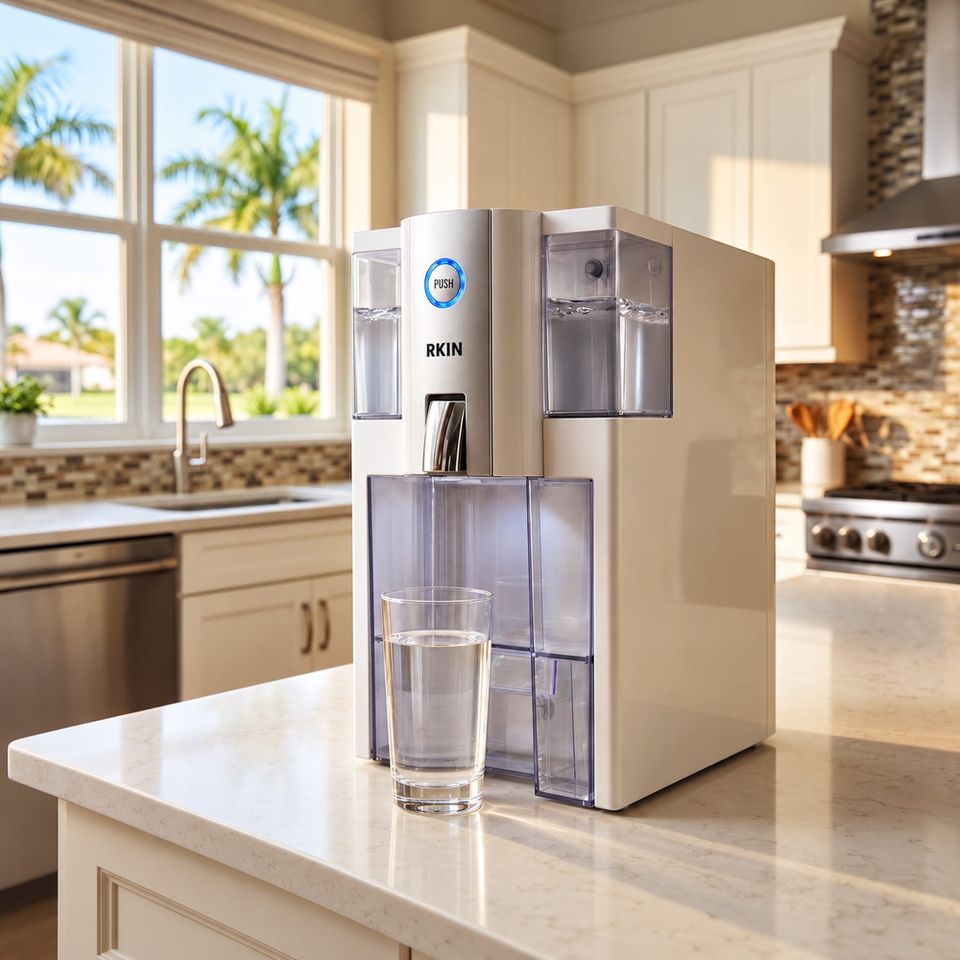

There is a moment, just before the first glass is poured, when the evening finds its rhythm. The bottle has been chosen, the glasses are waiting, and conversation gathers around the table. Opening and serving the wine can be a forgettable task—or one of the small pleasures that makes the occasion.
But good service does not require a collection of elaborate gadgets. The most useful wine serving accessories answer specific questions: Does this bottle need air? Is there sediment to separate? Could the cork break? And will the way the wine is poured make the gathering easier for everyone?
Those questions offer a practical way to look at the tools made by Vinotive, an Arizona-based wine-accessories company whose range includes bottle-mounted aerators, tabletop dispensers and a specialty opener for older corks. Vinotive describes its products as professional-quality and says they are used daily at hundreds of wineries across the United States. Its designs give everyday wine service a more considered appearance. The more important distinction, however, is what each tool actually does.
What wine serving accessories can—and cannot—change
Wine service often combines two different techniques that are easy to confuse: aeration and decanting. Aeration exposes wine to air, which some drinkers find helpful with young, concentrated reds. Decanting transfers wine to another vessel; for an older bottle, its clearest practical purpose is to leave sediment behind.
The Wine & Spirit Education Trust (WSET) makes an important distinction. Sediment can develop as certain wines age, but most everyday wines are filtered and rarely need decanting for that reason. WSET also describes the benefits of aeration as a matter of debate. More exposure to oxygen does not automatically mean a better glass.
A sensible starting point is to pour a small taste before reaching for a tool. If a young red seems closed or unusually firm, try swirling the wine in the glass and see what changes. If an older bottle has a visible deposit, careful handling and controlled pouring may matter more than aeration. Sometimes the right accessory is simply a dependable corkscrew.
The Vinaer: A more direct approach to aeration
For someone who regularly opens young Cabernet Sauvignon, Syrah or similarly structured reds, a pour-through aerator may be a practical convenience. Rather than transferring an entire bottle to a decanter, the device introduces air as wine moves toward the glass.
Vinotive's Vinaer 7 Function Wine Aerator fits directly into the bottle neck. According to the manufacturer's specifications, its air-mixing chamber uses multiple tubes and vents to expose wine to air during pouring. It also incorporates a fine stainless steel filter intended to catch cork fragments, a collar designed to reduce drips, and a stopper for temporarily closing the bottle.

The attraction is straightforward: the host can open, pour and serve without adding a separate vessel to the table. That can make a difference when dinner is informal, the table is crowded or guests are enjoying a bottle a glass at a time.
There are limits worth remembering. The presence of an aerator does not establish that any particular wine will taste better, and a small filter is not a substitute for carefully decanting an older bottle with substantial sediment. The stopper is a useful design detail, not a promise that an opened wine will remain unchanged. For a delicate vintage, an aggressive aeration step may be precisely what should be avoided.
The Vortex collection: Wine service as part of the table
Other accessories are less about solving a problem in the bottle and more about the experience around it. A decanter can make wine easy to share, while a tabletop dispenser changes who pours and how often the host needs to step in.
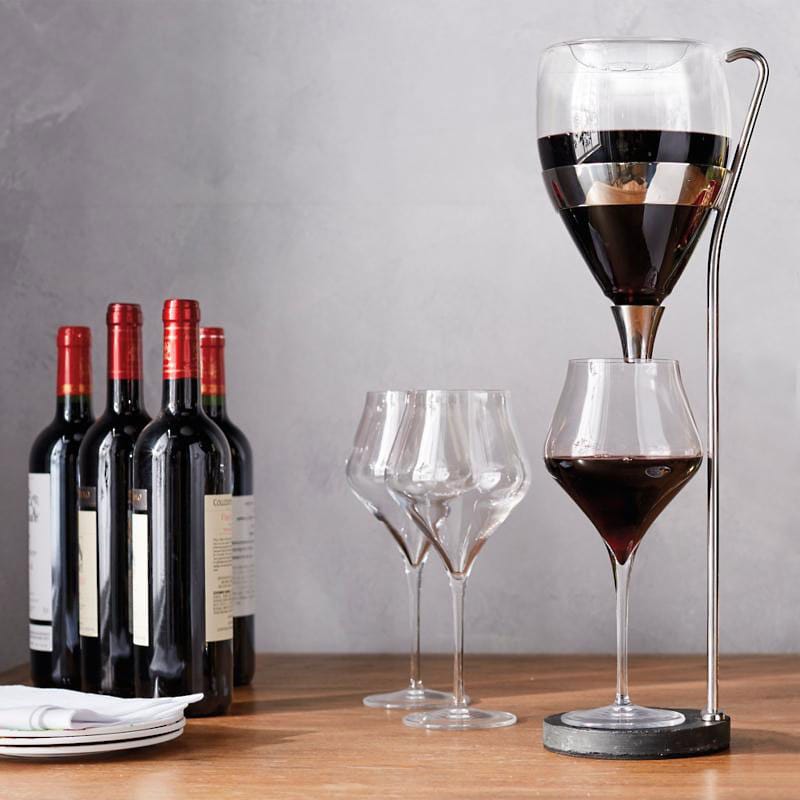
The Vortex Somm Aerating Wine Dispenser is built around a visible sequence: wine passes through a stainless steel rain filter into a clear vessel, then flows into a glass through a gravity-fed valve. Vinotive lists its capacity as one liter and identifies borosilicate glass, stainless steel and silicone among its materials.
Its appeal at a gathering is easy to understand. Guests can see the wine being served and, when appropriate, pour for themselves. That may be useful during a tasting or a leisurely dinner, especially if the host would rather stay in the conversation than manage every refill. It fits the same philosophy of unhurried hosting explored in Unhyd's guide to stress-free dinner parties.
The taller Vortex Tower Tritan Edition makes the presentation more prominent. Vinotive's listed bundle includes glass and shatter-resistant Tritan decanter sets, a stainless steel chilling ball, and a stand with a natural slate base. The manufacturer gives the system a one-liter capacity and positions the Tritan set for indoor and outdoor use.
These are more substantial pieces than a bottle-mounted aerator, so the practical questions are different: Is there enough space on the table? Will the components be easy to wash and store? Does the host actually want a self-service station? And is the wine suited to that style of pouring? For a fragile aged bottle, a slow, conventional decant may still be the more appropriate choice.
A beautifully designed dispenser can bring ceremony to an evening. It should not be mistaken for a universal improvement in the wine itself.
The Meritage opener: When the cork needs special care
Opening an older bottle presents a different challenge. Natural corks can become brittle or lose their integrity over time. A standard corkscrew, although suitable for most everyday bottles, can sometimes split a weakened cork instead of removing it cleanly.
WSET's guide to wine tools recommends considering a two-prong Ah-So opener for fragile older corks and explains how tools combining prongs with a corkscrew can provide support from both the outside and inside. It is an established category of tool, not an invention unique to any single manufacturer.
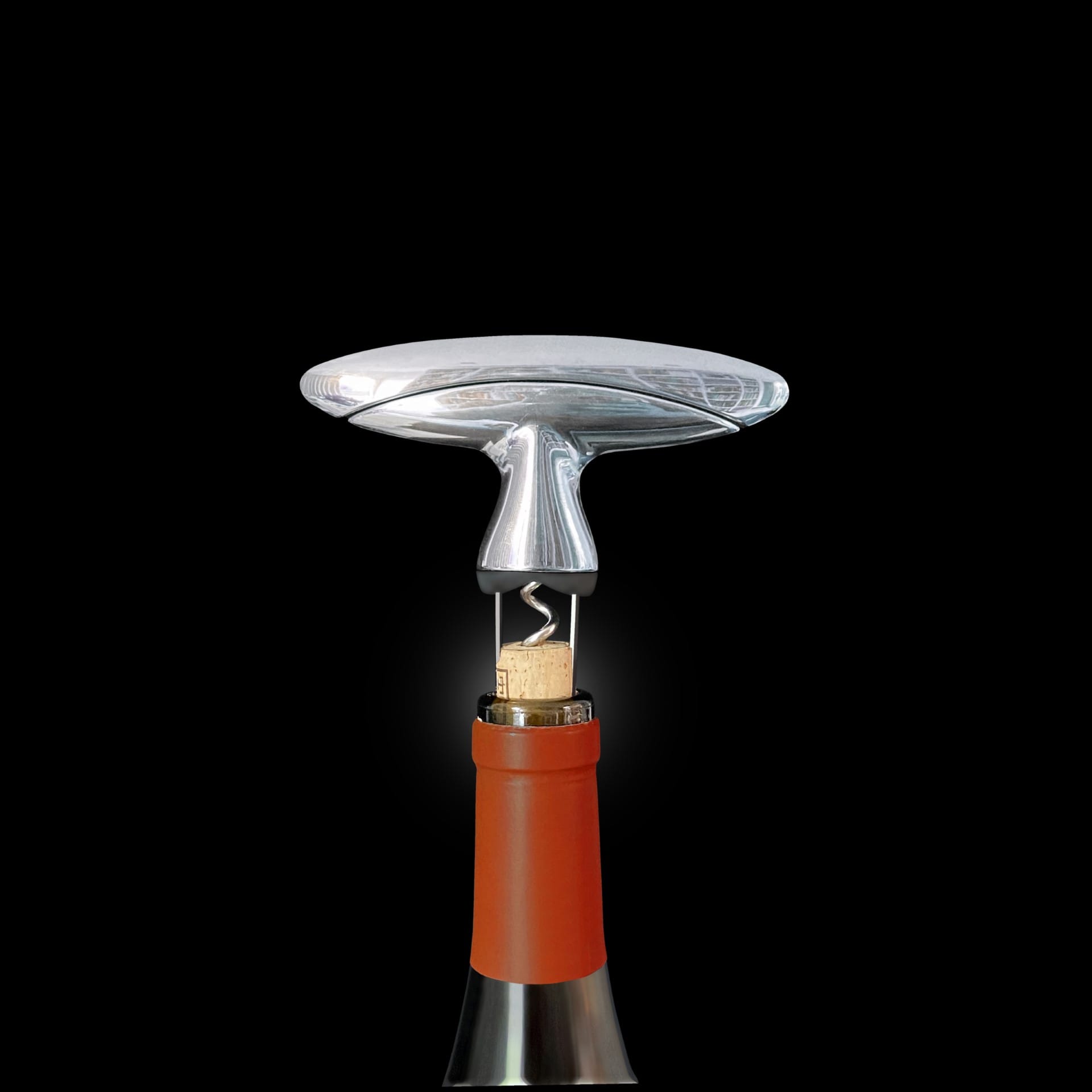
Vinotive's Meritage Dual Wine Opener uses that combined approach. Its two graduated steel prongs fit between the cork and bottle neck, while a self-centering spiral enters the cork from above. The components are designed to lock together so the cork can be drawn out with greater control. Vinotive markets the opener specifically for aged and compromised corks.
For a collector opening a well-aged bottle, that design addresses a real concern. It does not eliminate the possibility of a damaged cork, however, and careful technique remains important. As Decanter notes, even experienced professionals encounter corks that crumble. A broken cork also does not, on its own, mean the wine has suffered cork taint.
The Meritage is therefore more specialized than an everyday opener. Its value depends on how often someone opens older natural-cork bottles—not simply on how impressive the tool looks in a drawer.
Which tool belongs with which bottle?
The useful question is not which accessory is most luxurious. It is which one meets the needs of the wine and the occasion.
| Bottle or occasion | Consider | Why—and what to watch |
|---|---|---|
| Young, structured red | Swirling in the glass; optionally a pour-through aerator such as the Vinaer | Air exposure may change the wine's aromas and texture; taste first rather than assuming it needs treatment. |
| Older bottle with sediment | Gentle, deliberate decanting | The priority is leaving the deposit behind. Avoid unnecessary agitation and excessive aeration. |
| Fragile natural cork | Ah-So or combination opener such as the Meritage | Added support may reduce the risk of crumbling, but no opener guarantees an intact cork. |
| Group tasting or relaxed gathering | Decanter or tabletop dispenser such as the Vortex Somm or Tower | Presentation and convenient shared service can matter, provided the wine suits the format. |
| Ordinary weeknight bottle | Reliable corkscrew or screwcap; appropriate glass | Extra equipment may offer little benefit when the wine is ready to drink. |
Before buying, think about the ritual you actually have
An accessory earns its space when it gets used. A compact aerator may suit someone who opens young reds regularly and dislikes washing a full decanter. A dispenser may be worthwhile for frequent hosts but impractical for a small kitchen or occasional bottle. A dual-action cork opener makes far more sense for a collector with older bottles than for someone who mostly drinks current-release wines.
Construction and cleaning matter, too. Filters and valves introduce surfaces that need rinsing; larger dispensers need storage space; and a tool designed for delicate corks is only helpful when the user knows how to handle it. Appearance belongs in the decision, but it should not be the only criterion.
Vinotive's collection illustrates how different those priorities can be. The Vinaer favors a quick pour. The Vortex turns serving into a shared, visible gesture. The Meritage focuses on a difficult part of opening an older bottle. None is essential for every wine lover, and that is precisely why the distinctions matter.
The art of serving wine is not about making every bottle an event. It is about understanding when to do more, when to do less and how a thoughtful detail can make the table feel welcoming. The best tool is the one that lets the wine—and the people gathered around it—remain the point.
About Examined
Examined is Unhyd's in-depth editorial series exploring products, companies, people, and ideas through research, reporting, and independent analysis. Inclusion in Examined does not constitute an endorsement.