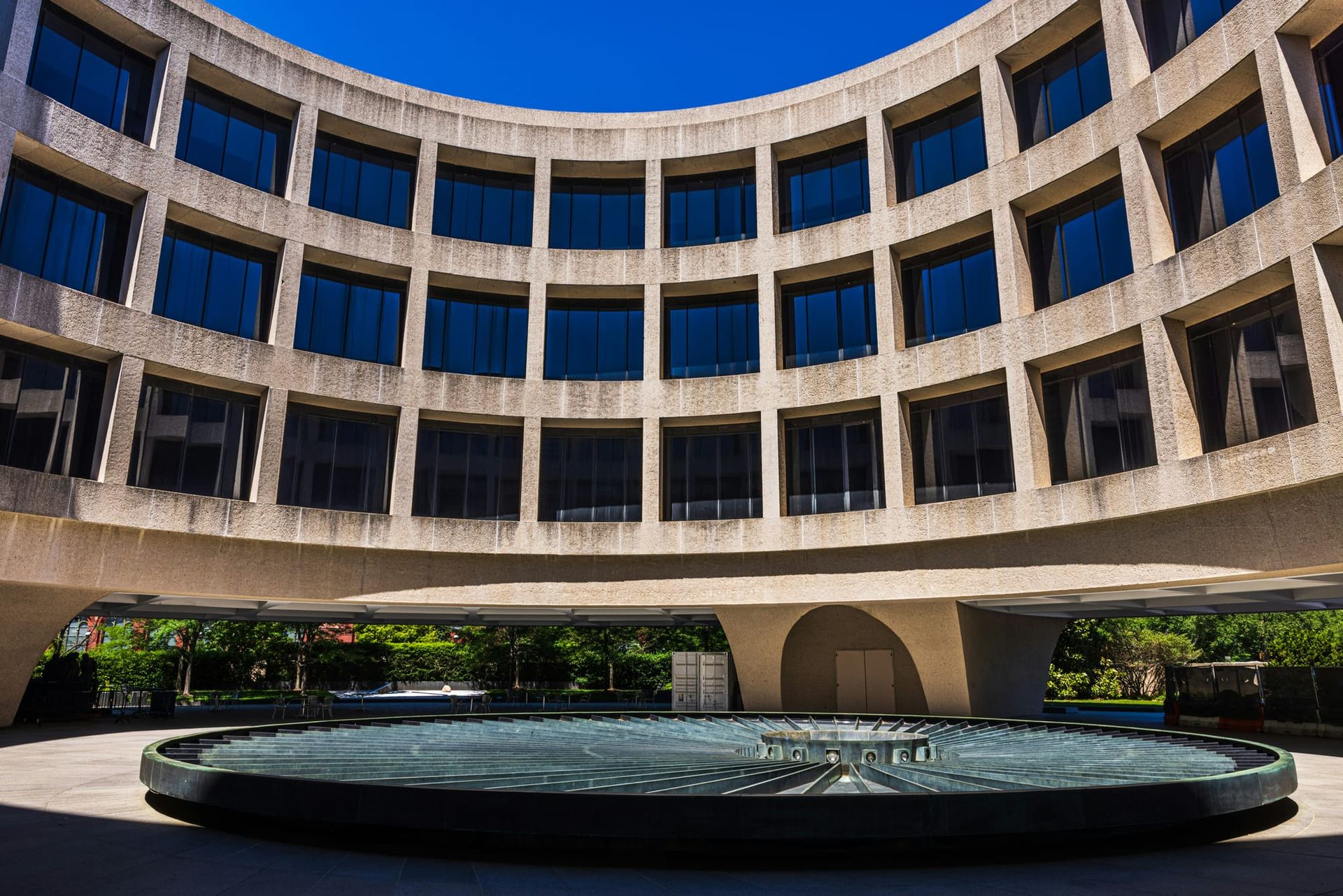
The Hirshhorn Museum's Sculpture Garden reopened on Washington's National Mall on October 31 with more art, more routes into the grounds and a newly restored link to the museum. The Hirshhorn Sculpture Garden reopening matters beyond the collection: it tests whether a national museum can make a remarkable body of modern and contemporary art easier to encounter without requiring visitors to plan an entire museum trip around it.
In an October 29 Smithsonian announcement, the museum described a 1.3-acre garden redesigned by artist and architect Hiroshi Sugimoto. Entrances have increased from two to five, while the number of artworks presented across the garden and museum plaza has risen from 35 to nearly 60. Those are concrete changes. They are not, by themselves, proof that the museum has solved every barrier to access.
At the Hirshhorn Sculpture Garden, access starts before the artwork
There is a practical difference between a museum that can be visited and one that can be entered naturally while someone is walking through a city. Before the redesign, the sunken garden's limited entry points could make it feel separate from the National Mall even though it stood alongside one of the country's busiest public cultural landscapes. The new plan introduces five at-grade entrances, accessible ramps and a restored 60-foot-wide approach from the Mall.
The museum also added overlooks where people can see works from the edges of the garden. That matters because an unplanned encounter with a sculpture does not necessarily begin at a ticket desk or a gallery threshold. A passerby might notice a work from outside, decide to descend, or simply stop for a moment. The garden's exhibitions and public programs are free, according to the museum's exhibition listing.
But physical access has several dimensions. A wider entrance is observable on a plan; whether pathways remain convenient for visitors using mobility aids, whether wayfinding is clear and whether people can find comfortable places to rest are questions best tested during ordinary visits. Unhyd has not independently inspected the reopened grounds or measured accessibility outcomes.
Three changes that can be counted—and one that cannot
The Smithsonian identifies three especially tangible changes: two entrances became five; the garden and plaza now display nearly 60 artworks compared with 35 previously; and an underground connection closed since the 1980s is back in use. The reopened passage is itself an artwork, Sugimoto's Passage of Reflectance, with polished stainless-steel walls intended to make movement between the museum plaza and garden an experience rather than merely a shortcut.
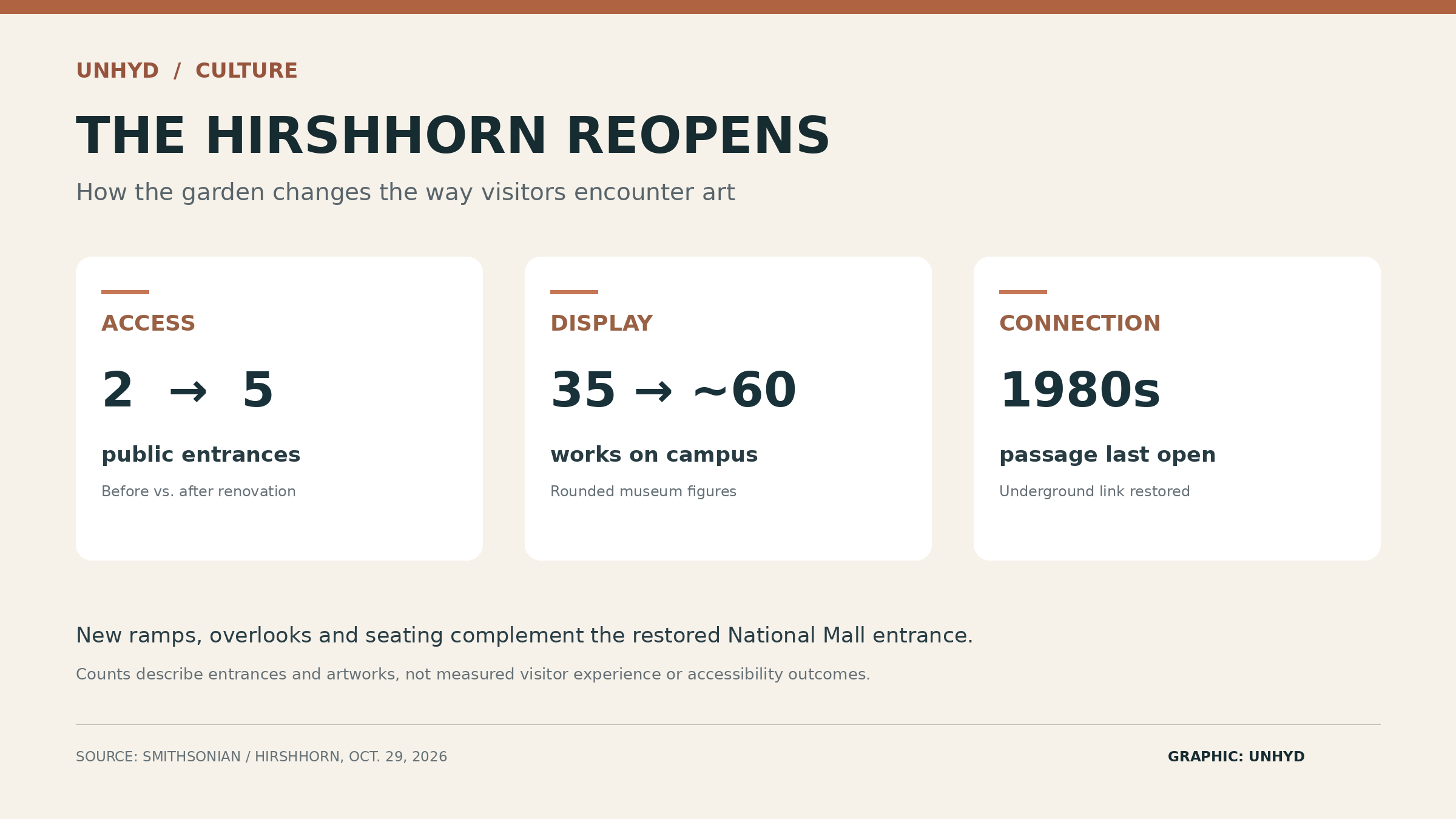
These numbers help explain what the renovation built. They cannot establish that more people will participate in museum culture, return for a second visit or find the experience welcoming. That requires visitor data, observations and feedback collected after opening. The distinction between a capacity increase and an experienced improvement should shape how the project is judged.
The redesign keeps history in sight without freezing the garden
The garden opened in 1974 as part of architect Gordon Bunshaft's modernist Hirshhorn campus. Landscape architect Lester Collins made changes in 1981, including more shade and seating. Sugimoto's project treats that history as a starting point rather than a constraint: hand-stacked stone walls reshape the outdoor galleries while a larger reflecting pool, seating and a performance area create room for activities other than quiet viewing.
The Smithsonian says the new landscape includes 57 trees and approximately 30,000 plants, largely native species. That is relevant to the visitor experience, particularly in warmer months, but planting figures do not establish how much shade or cooling visitors will actually receive. Maintenance, tree growth and weather will matter over time.
Artistically, the arrangement connects foundational holdings by Auguste Rodin, Henri Matisse, Henry Moore and Barbara Hepworth with contemporary work. The West Lawn opens with Yoshitomo Nara's Sentinels of Stillness, scheduled to run through November 7, 2027. The contrast gives visitors an opportunity to see sculpture as a continuing conversation rather than a fixed chronology.
Why the public-space question is bigger than the reopening
The most promising aspect of this project may be the decision to make a museum's edges more active. Overlooks allow art to meet the Mall; restored routes let visitors move between indoor and outdoor spaces; seating and a flexible lawn make room for people who are not there solely to examine a sculpture. In a city full of institutions, that is a meaningful design choice.
It also creates responsibilities. A space that invites more casual visits has to accommodate competing uses: visitors lingering to read, families attending public programs, people moving through, and those seeking a quieter encounter with art. A beautiful photograph of the completed garden cannot show how well those needs coexist on a crowded weekend.
For people visiting Washington, the museum lists opening-weekend programming, including art-making activities and artist talks, with additional information on its ongoing garden page. The location can fit a slower cultural itinerary; Unhyd's guide to traveling more deliberately makes the broader case for spending time with a place rather than treating every stop as a photo opportunity.
The measure of success begins after the ribbon cutting
The new Hirshhorn Sculpture Garden offers a specific proposition: public art may become more accessible when a museum improves the routes, sightlines and spaces around it, not just the number of objects on display. The renovation supplies clear evidence of physical changes; its longer-term social effect remains an open question.
The useful follow-up is not simply whether visitors admire Sugimoto's stonework. It is whether the garden draws people who might not otherwise enter, whether its routes work for visitors with different needs, and whether its expanded programming earns repeat participation. Those are the measures that would turn an ambitious architectural reopening into a durable cultural success.