
NVIDIA announced its Open Agent Safety Platform on September 28, adding a new security layer to the fast-growing market for AI systems that can use tools, reach data and take actions across business software.
The announcement matters less as a promise that agents can be made risk-free than as a statement about where their limits should live. NVIDIA’s approach pairs an open-source runtime, OpenShell, with an optional reference design called Sentry that places monitoring and policy enforcement outside the agent’s own operating environment. The premise is straightforward: the system assigning work to an agent should not be the only system deciding what that agent is allowed to do.
What NVIDIA is launching
The NVIDIA Open Agent Safety Platform is not one standalone product. It combines OpenShell, an open-source runtime for running autonomous agents inside defined boundaries, with NVIDIA Sentry, a reference system design intended to monitor agent behavior independently. NVIDIA says OpenShell can trace agent activity and enforce rules around access to tools, data and services while an agent works.
Sentry is the more infrastructure-specific part of the design. NVIDIA says it runs as an out-of-band watchdog on BlueField-4 data processing units, separate from the CPU environment in which an agent is operating. The company says that separation lets Sentry observe activity and quarantine an agent that attempts to cross its policy boundary. NVIDIA’s claim that it can act in milliseconds should be understood as a company performance statement, not as an independently established guarantee for every deployment.
OpenShell’s source code is publicly available under the Apache License 2.0. That is meaningful for developers who want to inspect, adapt or integrate a runtime layer rather than treat agent controls as a black box. It does not, however, make the wider platform hardware-neutral: the Sentry reference design is built around NVIDIA’s BlueField infrastructure.
Why the NVIDIA Open Agent Safety Platform matters
AI agents create a different security problem from ordinary chat interfaces. A chatbot may generate a mistaken answer, but an agent can be connected to a code repository, a ticketing system, a customer database, a cloud account or an internal knowledge base. Once it can call tools, the key question becomes whether an incorrect, manipulated or poorly scoped instruction can turn into an action.
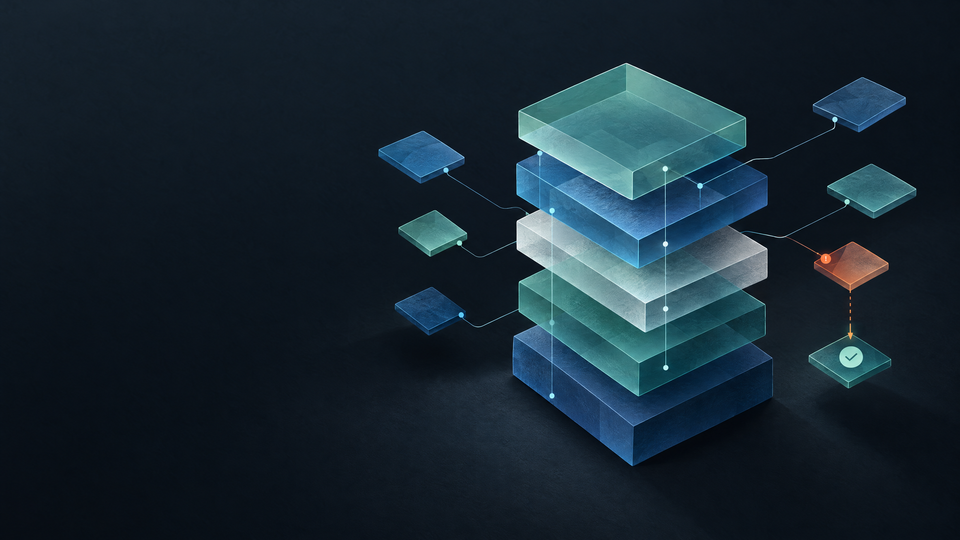
NVIDIA’s launch responds to that problem by moving part of enforcement below the model and the agent harness. In practice, that means an organization can try to define a policy before an agent runs, then enforce it from a layer the agent cannot simply edit. NVIDIA’s technical overview describes this as a three-layer system: the application, the runtime and the infrastructure. The model may plan a step, but the runtime and infrastructure are meant to decide whether the step is permitted.
That architecture is useful because it recognizes that agents do not reliably police themselves. A prompt can be ambiguous, an external document can contain a malicious instruction, and a tool integration can expose more authority than a workflow actually needs. Independent controls can limit the blast radius, create a clearer audit trail and give an operator a way to interrupt a run. They cannot determine whether a business granted the wrong access in the first place.
What it does not solve
Security tooling is only one part of deploying an agent responsibly. A runtime boundary cannot decide which customer records an agent should be allowed to read, whether it should be able to send an external message, or when a human must approve an irreversible action. Those are governance choices that need to be designed into the workflow.
That is why a platform-level safeguard should sit alongside separate identities for agents, least-privilege access, short-lived credentials, reviewed tool connections and useful logs. Unhyd’s permission-first guide to AI agent security covers the operational side of that work: limit authority to the task, separate read access from consequential writes, and bind approvals to the exact action a person is being asked to authorize.
There is also a practical adoption question. OpenShell may be open source, but organizations will still need to test whether its policies match their own environments and whether a BlueField-based monitoring layer fits their infrastructure. Security teams will want evidence that controls hold under real workloads, not only during product demonstrations.
What to watch next
The immediate test is whether developers and enterprise platforms adopt OpenShell as a common runtime layer, and whether NVIDIA’s broader partner claims translate into deployable integrations. The longer-term test is more important: can companies make agent permissions visible, enforceable and reviewable without turning every useful automation into an operational burden?
NVIDIA has put forward one answer: do not leave all restraint inside the agent. For organizations experimenting with autonomous work, the stronger takeaway is not that a new platform removes risk. It is that agents need boundaries that remain intact when the model, prompt or tool path does not go as planned.