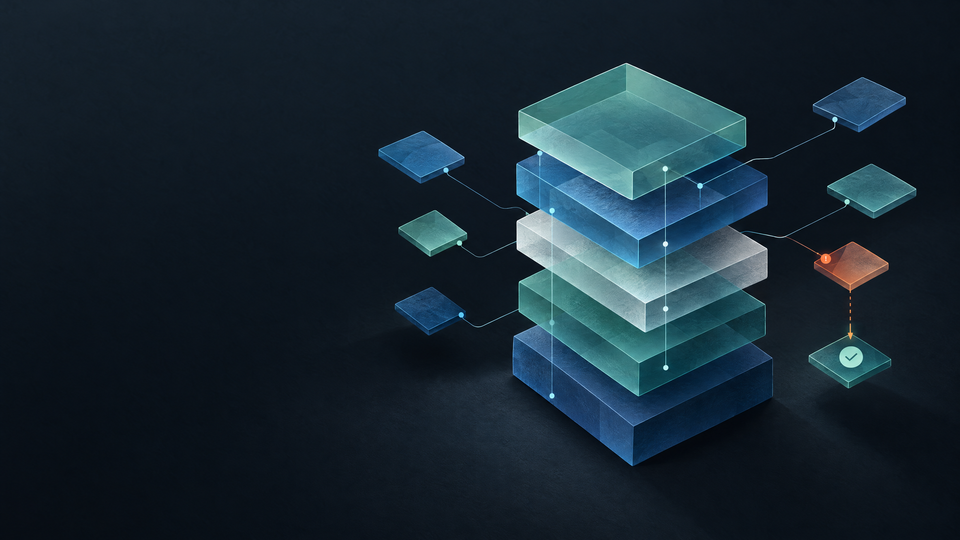

Microsoft and HUMAIN have announced a proposed expansion of their enterprise AI collaboration, adding a workplace software bundle and a Windows-based AI PC to earlier plans around Arabic-language models. The announcement, made on August 31 at LEAP 2026 in Riyadh, is a meaningful step in the companies’ stated strategy. It is not, however, evidence that the planned products are broadly deployed or that their adoption targets have been met.
The distinction matters. The companies are describing a stack that could reach from models and cloud infrastructure to employees’ daily software and computers. For organizations weighing AI investments, the practical questions will be availability, integration, data handling and measurable results—not only the scale of the announcement.
What the Microsoft-HUMAIN partnership adds
HUMAIN and Microsoft say they intend to offer HUMAIN ONE together with Microsoft 365, including Microsoft 365 Copilot and Microsoft’s IQ capabilities, as an AI productivity bundle for enterprise customers. According to the companies’ announcement, the offering is planned to run on Microsoft Azure and initially targets one million users across the Middle East and Africa.
HUMAIN ONE is described as an agentic AI layer that would let employees work with enterprise applications, data and workflows through a single interface. The companies say they plan to expand the offering into human resources, finance, procurement and IT. Those are intended use cases, rather than announced customer deployments. The release does not set out pricing, a general availability date or named enterprise customers for the bundle.
This builds on the companies’ August 26 announcement that they intended to make HUMAIN’s ALLAM models available through Microsoft Foundry and support specialized Arabic-language agents through Microsoft 365 Copilot. The new plan broadens the emphasis from model access and deployment support toward a bundled workplace product. It also gives a concrete commercial frame to the theme of AI moving into ordinary business systems.
A Windows AI PC is part of the plan
The expanded collaboration also reaches the employee endpoint. HUMAIN said its first AI PC is planned to launch with Microsoft Windows and become available for enterprise purchase from September 20. In a separate August 31 press note, Qualcomm identified the device as Horizon Ultra, a HUMAIN AI PC powered by Snapdragon X2 Elite.
Qualcomm says Horizon Ultra combines an 18-core Qualcomm Oryon CPU with Adreno GPU and Hexagon NPU processing. That mix is designed to place some AI workloads on the device while leaving room to use cloud services when more computing capacity is needed. Qualcomm also says HUMAIN intends to introduce its own operating system in the line’s next iteration in 2027. The September availability date applies to enterprise purchase of the Windows version; it should not be read as a consumer launch or proof of one million devices in use.
Why the layered approach matters
Many enterprise AI projects still stall between a promising demonstration and a useful workflow. A model may perform well in isolation yet fail to fit a company’s identity controls, permissions, data-retention requirements or existing applications. Bringing a model, productivity software, deployment support and endpoint hardware into the same commercial plan does not solve those problems automatically. It does make the integration question more central to the product proposition.
For HUMAIN, the approach connects its Arabic models and regional enterprise ambitions to Microsoft’s workplace and cloud products. For Microsoft, it creates a path to package Copilot with a regional partner’s applications, implementation support and devices. The announcement arrives during a busy week for HUMAIN at LEAP, where the company has also disclosed a separate planned Saudi AI data-center partnership. That context shows a company pursuing infrastructure, models, applications and devices in parallel, rather than treating them as separate bets.
What buyers should watch next
The one-million-user target and the goal of one million AI PCs across the Middle East and Africa by 2030 are company targets, not current adoption figures. The more informative milestones will be a defined release schedule for the software bundle, which markets it serves first, how HUMAIN ONE connects to existing enterprise systems and what controls govern actions taken by AI agents.
For the hardware, buyers will need practical details beyond the processor: configuration options, local-model support, security and manageability features, pricing, support terms and how much functionality remains available when a device is offline. Enterprises considering the combined offering should also distinguish workloads that can stay on a device from those that will send data to cloud services.
For now, the Microsoft-HUMAIN partnership is best understood as a declared product and go-to-market expansion. Its importance lies in the architecture of the plan: Arabic AI models, Microsoft’s enterprise tools, Azure-hosted services and on-device processing are being positioned as parts of one workplace offering. Whether that positioning becomes durable adoption will depend on the implementation details that follow.