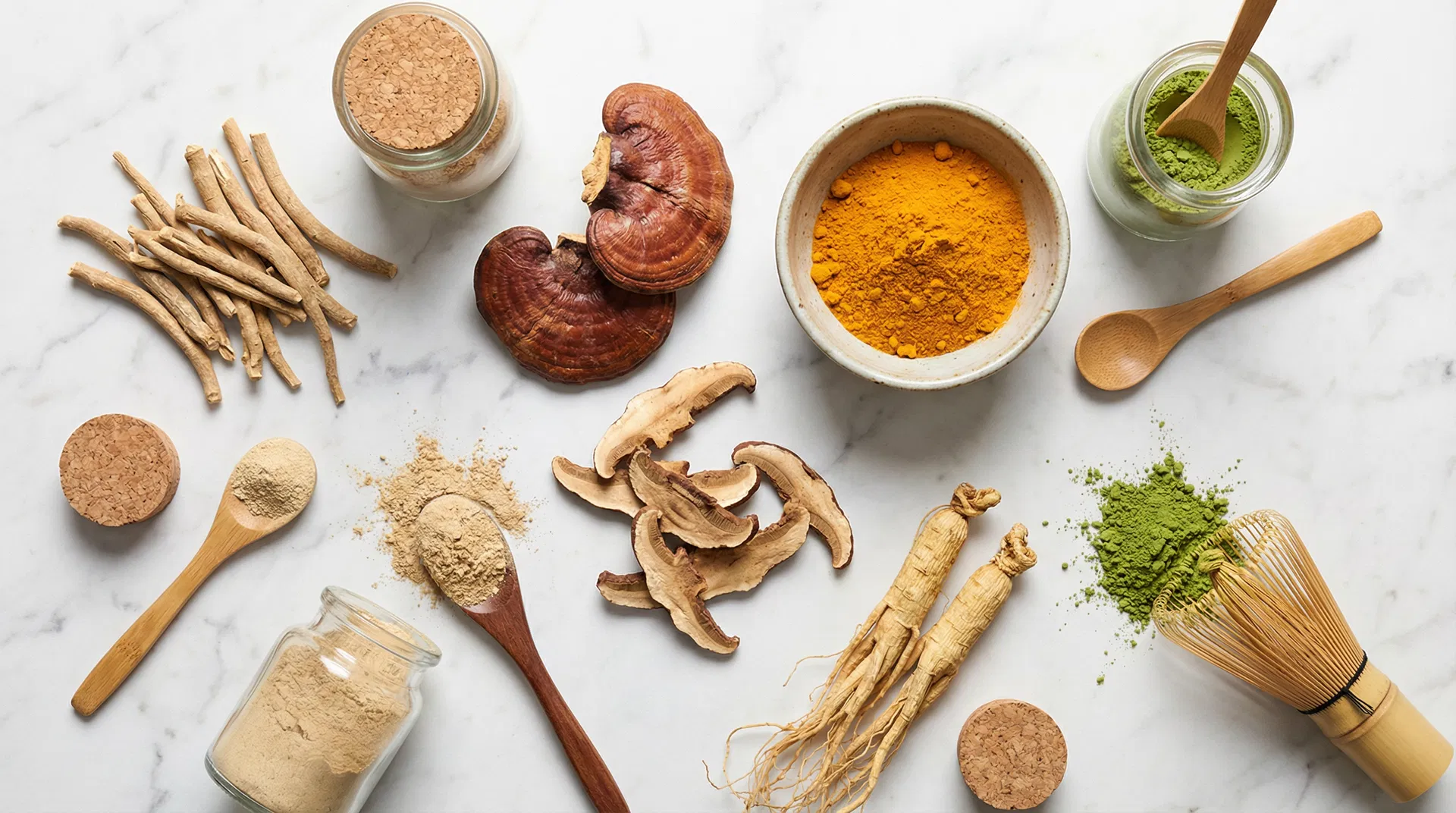
Adaptogens — a category of herbs and mushrooms claimed to help the body adapt to stress — have become one of the fastest-growing segments in the natural products industry. But behind the marketing claims lies a complex scientific landscape where genuine efficacy, overstated benefits, and outright pseudoscience coexist. This guide separates what the evidence actually supports from what is primarily marketing.
What Is an Adaptogen?
The term "adaptogen" was coined by Soviet pharmacologist Nikolai Lazarev in 1947 to describe substances that increase non-specific resistance to stress. For a substance to qualify as an adaptogen, it must:
- Be non-toxic at normal doses
- Produce a non-specific response to stress (physical, chemical, or biological)
- Normalize physiological functions regardless of the direction of the stressor
The Evidence-Supported Adaptogens
Ashwagandha (Withania somnifera)
Ashwagandha has the strongest clinical evidence base of any adaptogen. Multiple randomized controlled trials have demonstrated statistically significant reductions in cortisol levels, perceived stress scores, and anxiety symptoms. A 2019 study published in Medicine found a 27.9% reduction in serum cortisol in the treatment group.
Rhodiola Rosea
Rhodiola has solid evidence for reducing mental fatigue and improving cognitive performance under stress. The European Medicines Agency has issued a positive assessment for its use in temporary relief of symptoms of stress.
Lion's Mane Mushroom (Hericium erinaceus)
Lion's Mane has demonstrated neuroprotective properties and potential benefits for cognitive function in preliminary studies. It contains compounds called hericenones and erinacines that may stimulate nerve growth factor (NGF) production.
The Marketing-Heavy Claims to Approach with Skepticism
- Chaga mushroom — strong antioxidant properties in vitro, but limited human clinical evidence
- Maca root — evidence for energy and libido is preliminary; most studies are small and short-term
- Reishi mushroom — immune modulation benefits are plausible but human trial data is limited
- Astragalus — traditional use is well-documented; modern clinical evidence is emerging but not yet definitive
How to Evaluate Adaptogen Products
- Look for products that specify the extract standardization (e.g., "5% withanolides" for ashwagandha)
- Check for third-party testing from NSF International or USP
- Be skeptical of proprietary blends that hide individual ingredient doses
- Consult a healthcare provider before use if you take medications — several adaptogens have documented drug interactions
The adaptogen category was prominently featured at Natural Products Expo West 2026, where functional beverage brands dominated foot traffic. The gut-health connection to stress response is explored in our feature on the gut-brain connection and mental health research.