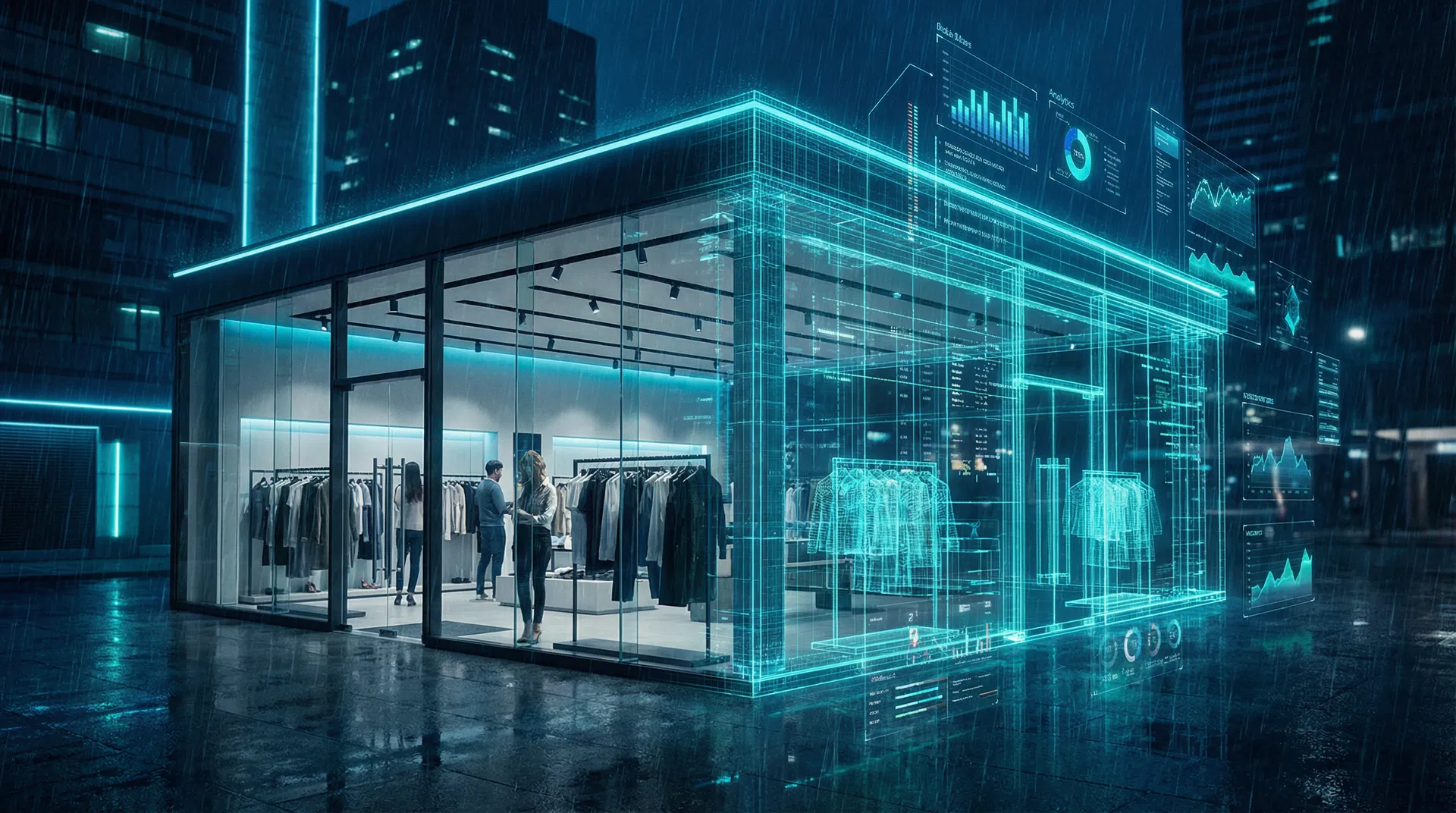

Imagine a scenario where your favorite clothing brand doesn't just know your size, but understands the precise contours of your body, allowing you to virtually try on a new collection with photorealistic accuracy from your living room. This is the tangible impact of digital twin technology — a concept poised to fundamentally reshape the brand-consumer relationship in 2026.
What Is a Digital Twin?
A digital twin is a dynamic, virtual representation of a physical object, system, or person, continuously updated with real-time data from its real-world counterpart. While the technology has its roots in industrial manufacturing and aerospace, it is now becoming a critical differentiator for consumer-facing brands.
The enterprise applications of digital twins are closely intertwined with the spatial computing revolution — explored in our feature on how Apple Vision Pro and Meta Quest are redefining work.
Hyper-Personalization at Scale
The clamor for personalization has reached a fever pitch, with consumers increasingly expecting brands to anticipate their needs. Digital twins enable a shift from reactive personalization to predictive personalization. Consumer behavior studies indicate that over 75% of shoppers are more likely to purchase from brands that offer personalized experiences.
Operational Efficiency and Supply Chain Optimization
Beyond customer experience, digital twins are a formidable tool for optimizing complex business operations. A 2025 Deloitte report found that companies leveraging digital twins in their supply chains realized an average of 15–20% reduction in operational costs and a 10% improvement in order fulfillment accuracy.
Accelerating Product Development
Digital twins provide a sandbox for innovation, allowing engineers to explore bold ideas and push the boundaries of what's possible without the cost of physical prototypes. An electronics manufacturer can use a digital twin to assess thermal performance of a new smartphone design under various usage scenarios before a single physical unit is built.
The Metaverse Connection
As immersive virtual worlds mature, digital twins become the foundational building block for commerce within them. Brands that have already laid the groundwork will be able to extend their presence into the metaverse, offering virtual try-ons and interactive product demonstrations. The digital twin market is projected to reach $120 billion by 2028.
Strategic Implications for Brands
- Start with a single high-value use case (supply chain or product visualization) before scaling
- Invest in data infrastructure — digital twins are only as good as the data feeding them
- Partner with spatial computing platforms early to secure favorable integration terms
- Consider sustainability reporting benefits: digital twins reduce physical waste in R&D
For brands navigating the post-hype economy, digital twin strategy is one of the few technology investments with clear, measurable ROI. See also: how direct-to-consumer brands are surviving the post-hype economy.