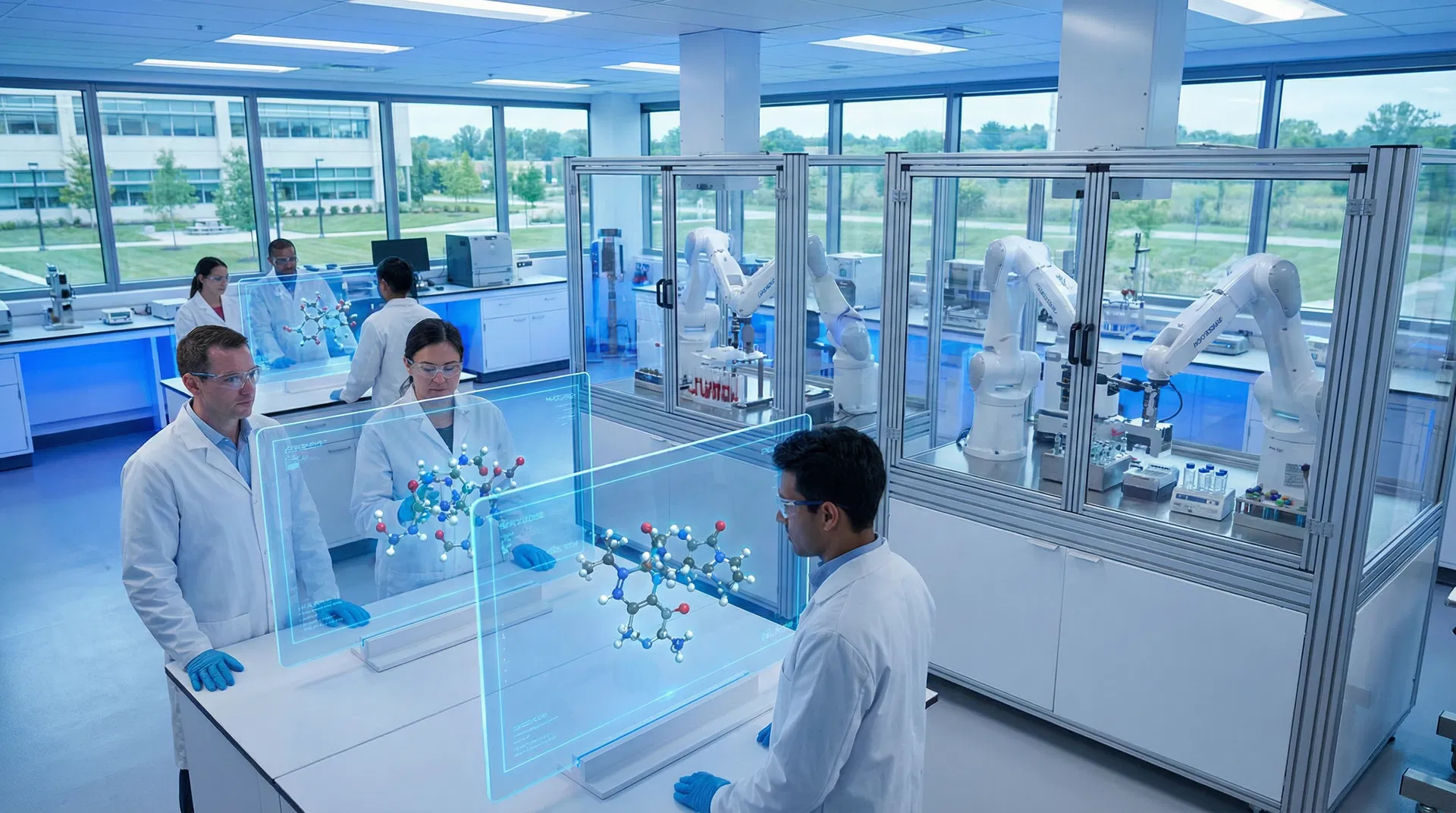

Drug discovery has historically been one of the most expensive and time-consuming endeavors in science — taking an average of 12 years and $2.6 billion to bring a single new drug to market, according to the Tufts Center for the Study of Drug Development. Artificial intelligence is beginning to compress that timeline dramatically, with implications for patients, pharmaceutical companies, and the entire healthcare ecosystem.
How AI Is Accelerating Drug Discovery
Protein Structure Prediction
DeepMind's AlphaFold solved one of biology's grand challenges — predicting the three-dimensional structure of proteins from their amino acid sequences. This breakthrough, which earned the 2024 Nobel Prize in Chemistry, has enabled researchers to identify drug targets that were previously invisible.
Molecular Generation and Screening
AI systems can now generate and screen millions of potential drug candidates in silico — in computational simulation — before a single molecule is synthesized in a laboratory. Companies like Recursion Pharmaceuticals, Insilico Medicine, and Atomwise have built platforms that reduce the hit identification phase from years to weeks.
Clinical Trial Optimization
Agentic AI systems — explored in our feature on how autonomous AI is transforming enterprise operations — are being applied to clinical trial design, patient recruitment, and real-time safety monitoring, reducing both cost and duration.
Landmark Results in 2025–2026
- Insilico Medicine's AI-designed drug candidate for idiopathic pulmonary fibrosis completed Phase II trials in under 30 months — roughly half the industry average
- BenevolentAI identified a novel treatment target for chronic kidney disease using AI analysis of existing clinical data
- Exscientia demonstrated that AI-designed molecules have a 2x higher success rate in Phase I trials compared to traditionally designed compounds
The Intersection with Wearable Health Data
The explosion of real-world health data from wearable devices — covered in our feature on wearable health tech and disease prevention — is providing AI drug discovery platforms with unprecedented datasets for identifying disease biomarkers and treatment response patterns.
Regulatory and Ethical Considerations
The FDA has published guidance on AI use in drug development, and the European Medicines Agency has issued a reflection paper on AI in the product lifecycle. The governance frameworks being developed here will shape how quickly AI-discovered drugs reach patients.


