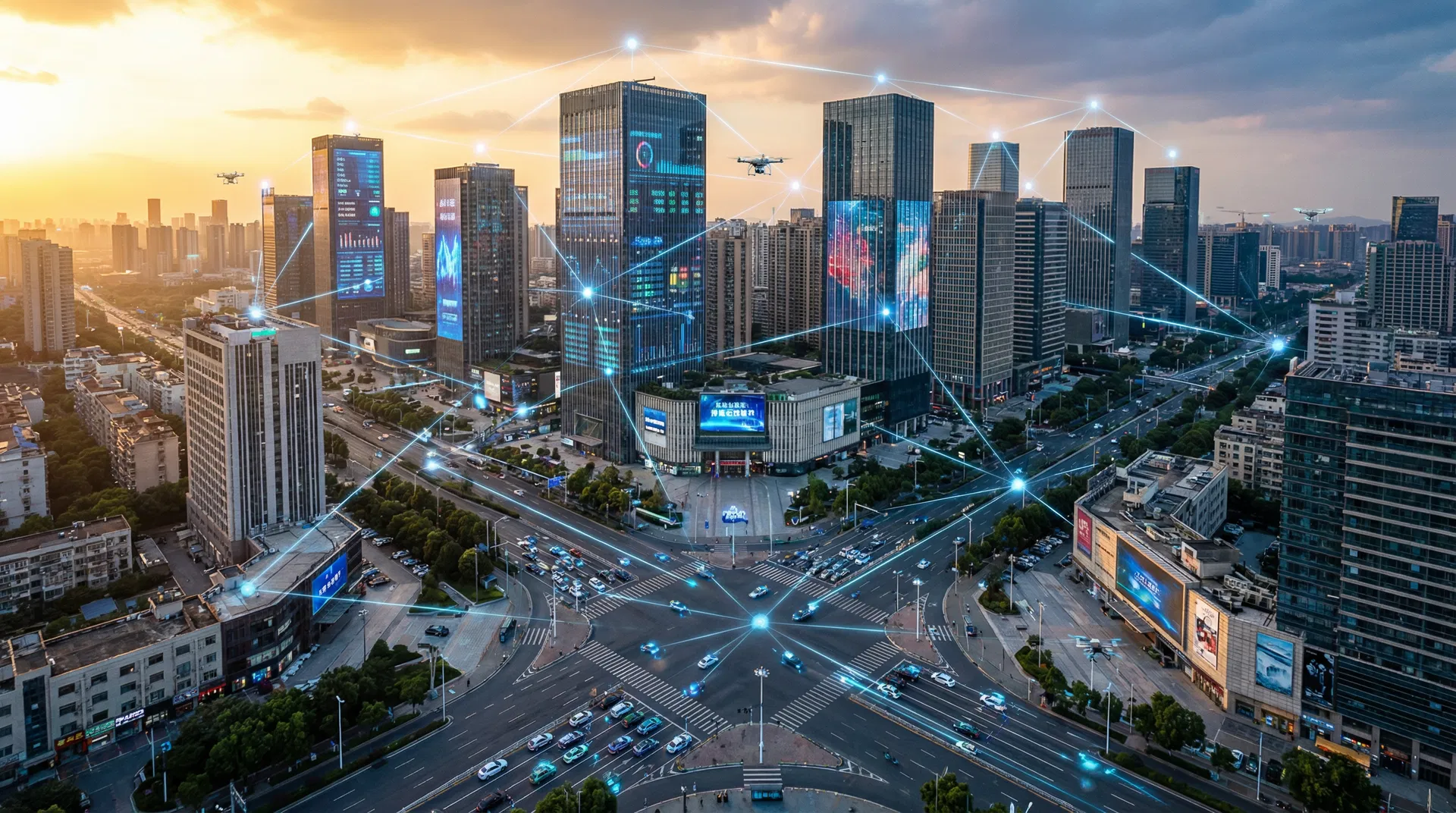

The next chapter of wireless technology is quietly unfolding, not with the fanfare that accompanied the initial rollout of 5G, but with a more profound evolutionary stride. This new era is defined by 5G Advanced (also called 5.5G) — a significant upgrade that promises to bridge the gap between current 5G capabilities and the futuristic vision of 6G.
What Makes 5G Advanced Different
While 5G laid the groundwork with increased bandwidth and lower latency, 5G Advanced builds upon this foundation with three critical enhancements:
- Native AI and machine learning capabilities integrated directly into the network
- Dynamic resource allocation — the network learns and adapts to user demands in real time
- Granular service differentiation — a self-driving car requiring ultra-low latency and a smart sensor needing low power are provisioned differently, automatically
Transforming Urban Transportation
The ultra-reliable low-latency communication (URLLC) offered by 5G Advanced is a critical enabler for autonomous vehicles. Vehicles communicate with each other and with surrounding infrastructure in real time, creating safer and more efficient traffic flow. The Urban Mobility Initiative predicts 5G Advanced could reduce traffic congestion in major cities by as much as 30% within the next decade.
This infrastructure layer is foundational to the electric aviation future explored in our feature on eVTOL aircraft and the future of electric aviation.
Revolutionizing Public Safety
The massive machine-type communication (mMTC) capabilities of 5G Advanced allow for the deployment of a vast network of sensors and cameras throughout a city. First responders gain access to real-time data from multiple sources simultaneously — including live video feeds from inside buildings, occupant location data, and hazardous material detection.
Building Sustainable Cities
Smart grids powered by 5G Advanced enable more efficient electricity distribution, integrating renewable energy sources more effectively. The city of Seoul, a pioneer in smart city technology, has already demonstrated significant reductions in energy consumption through 5G-enabled infrastructure.
Challenges and the Digital Divide
The road to a fully realized 5G Advanced-powered city is not without challenges:
- Infrastructure deployment requires significant capital investment
- Data privacy and security concerns must be addressed through robust governance frameworks — see our coverage of the Alliance for Responsible AI for context on how industry is approaching self-regulation
- Equitable access must be ensured so that the benefits reach all communities, not just affluent urban centers